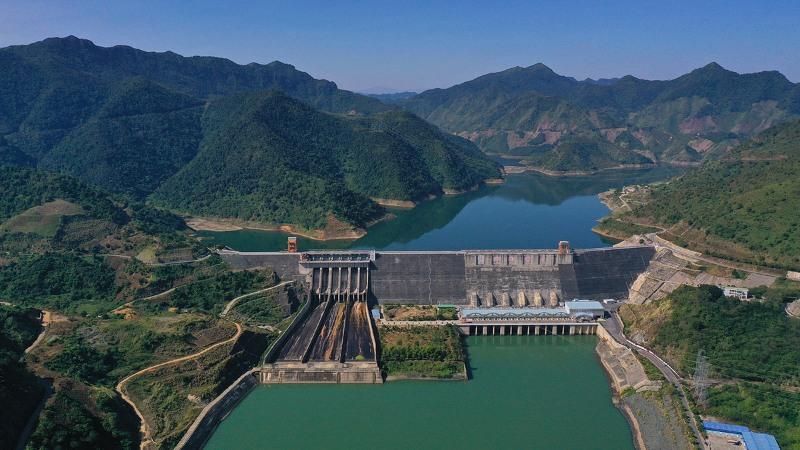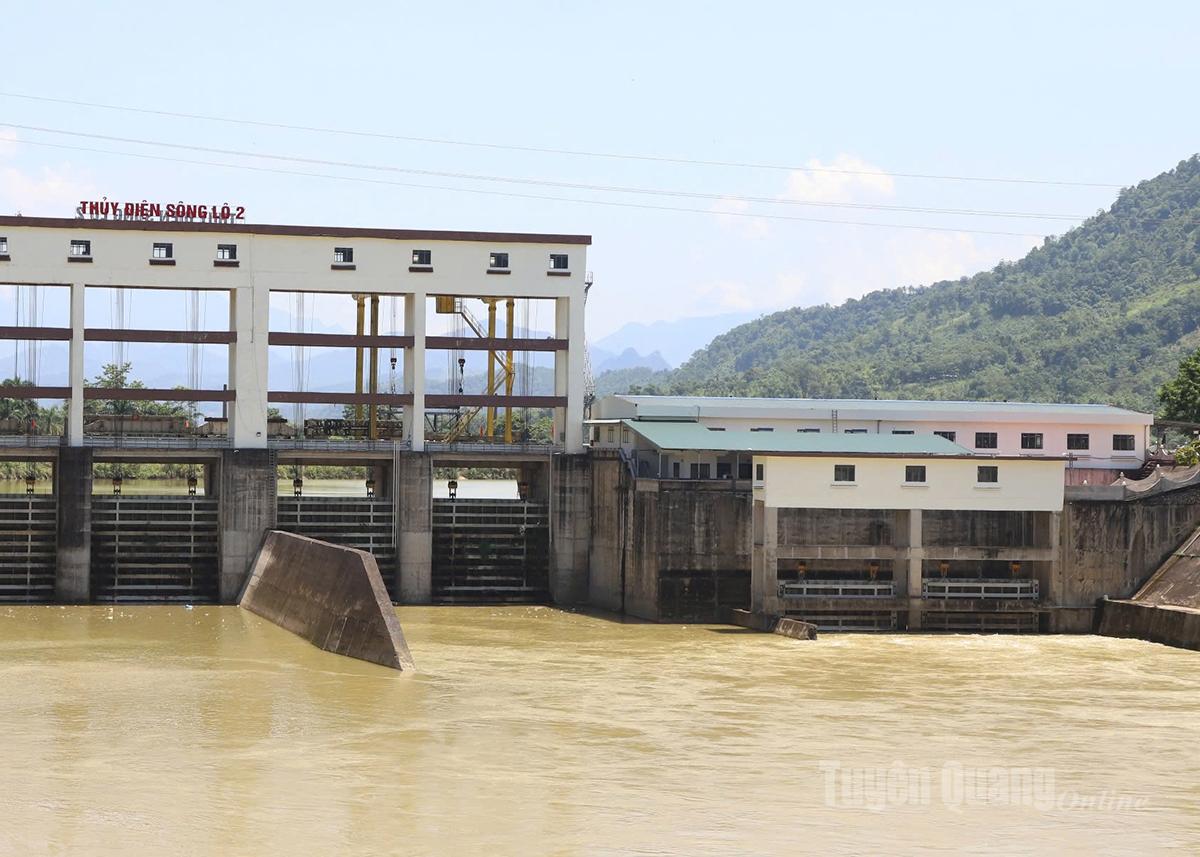
Lo 2 River Hydropower Plant partly supports the province's energy security
Providing Sufficient and Stable Energy
According to Tuyen Quang Power Company, the unit currently serves nearly 500,000 customers, with an annual electricity consumption demand totaling billions of kWh. Driven by growing industrial development, the province’s electricity consumption demand increases by an average of about 9–10% per year. This places significant pressure on the efforts to ensure national energy security.
Tuyen Quang is characterized by numerous rivers and streams flowing across hilly, mountainous terrain with steep slopes, serving as the headwater source for irrigation and silt deposition for the midland and delta regions of Northern Vietnam. This includes major rivers like the Gam and Lo Rivers. This geographic advantage is a substantial potential for Tuyen Quang to develop a system of small and medium-sized hydropower plants, ensuring a full, stable, and high-quality energy supply for the province's socio-economic development and boosting industrial growth.
Statistics from competent authorities show that the province currently has 52 operational hydropower plants with a total capacity exceeding 1,292 MW. Additionally, 31 hydropower projects have received investment approval and are under construction, with a total capacity of nearly 360 MW. Furthermore, 9 hydropower projects have been planned but have not yet received investment approval, totaling over 256 MW.
The Tuyen Quang Hydropower Plant, with an installed capacity of 342 MW, is the largest in the province. Annually, the plant generates over 1.6 billion kWh for the national grid, making a critical contribution to local energy security and the power system in the Northern region, helping to alleviate power shortages and ensuring electricity supply for the provincial economy and daily life.
The leadership of the Department of Industry and Trade affirmed that the province's power plants collectively supply the national grid with more than 5 billion kWh per year, sufficiently meeting the electricity demands for production, business, and daily life of businesses and the public. This contributes significantly to maintaining national energy security, creating stable employment for thousands of workers, and promoting local socio-economic development.
Developing Clean Energy
Currently, most of the energy exploited domestically still relies on finite fossil fuels like coal and oil/gas, which cause negative environmental impacts. To ensure national energy security in line with the views and orientation of Politburo Resolution No. 70 and to implement Power Master Plan VIII (Quy hoạch điện VIII), along with Vietnam's commitment at COP26 to achieve Net Zero emissions by 2050, the Provincial Party Committee has set the following goals: Effectively exploit and utilize local energy potential, especially renewable, new, and clean energy; use energy efficiently and economically; develop synchronous and smart energy infrastructure; and encourage economic sectors to develop various forms of rooftop solar power and biomass power from agricultural and forestry by-products.
To attract investment and encourage the development of green and renewable energy projects, the province currently has 2 operational biomass power plants (not supplying the national grid) with a total capacity of 47.5 MW. One biomass power project with a total capacity of 50 MW has received investment approval and is currently in the preparation phase. Furthermore, 221 organizations and individuals have invested in infrastructure and sell solar power to the Power Company, with a total installed capacity of 6,848 kWp.
Additionally, according to Mr. Hoang Duc Tien, Deputy Director of the Department of Industry and Trade, the adjusted Power Master Plan VIII, integrated into the Tuyen Quang Provincial Development Master Plan for the 2021–2030 period, with a vision to 2050, includes developing an additional 150 MW of biomass power capacity and over 650 MW of solar power projects in the 2025–2035 period.
The Resolution of the 1st Provincial Party Congress, 2025–2030 term, identified 18 key targets across various sectors. These include striving for an average Gross Regional Domestic Product (GRDP) growth rate of 10.5% per year for the 2026–2030 period; achieving a GRDP per capita of 95 million VND/person by 2030; and aiming for State budget revenue in the area to reach 12,000 billion VND; with labor productivity exceeding 213 million VND/laborer. Achieving these ambitious growth results fundamentally requires the assured guarantee of energy security for all socio-economic development activities within the province.
Nguyen Thanh Hieu
From a Vietnamese source on tuyenquangonline